
Sri Lanka: The Places in Between
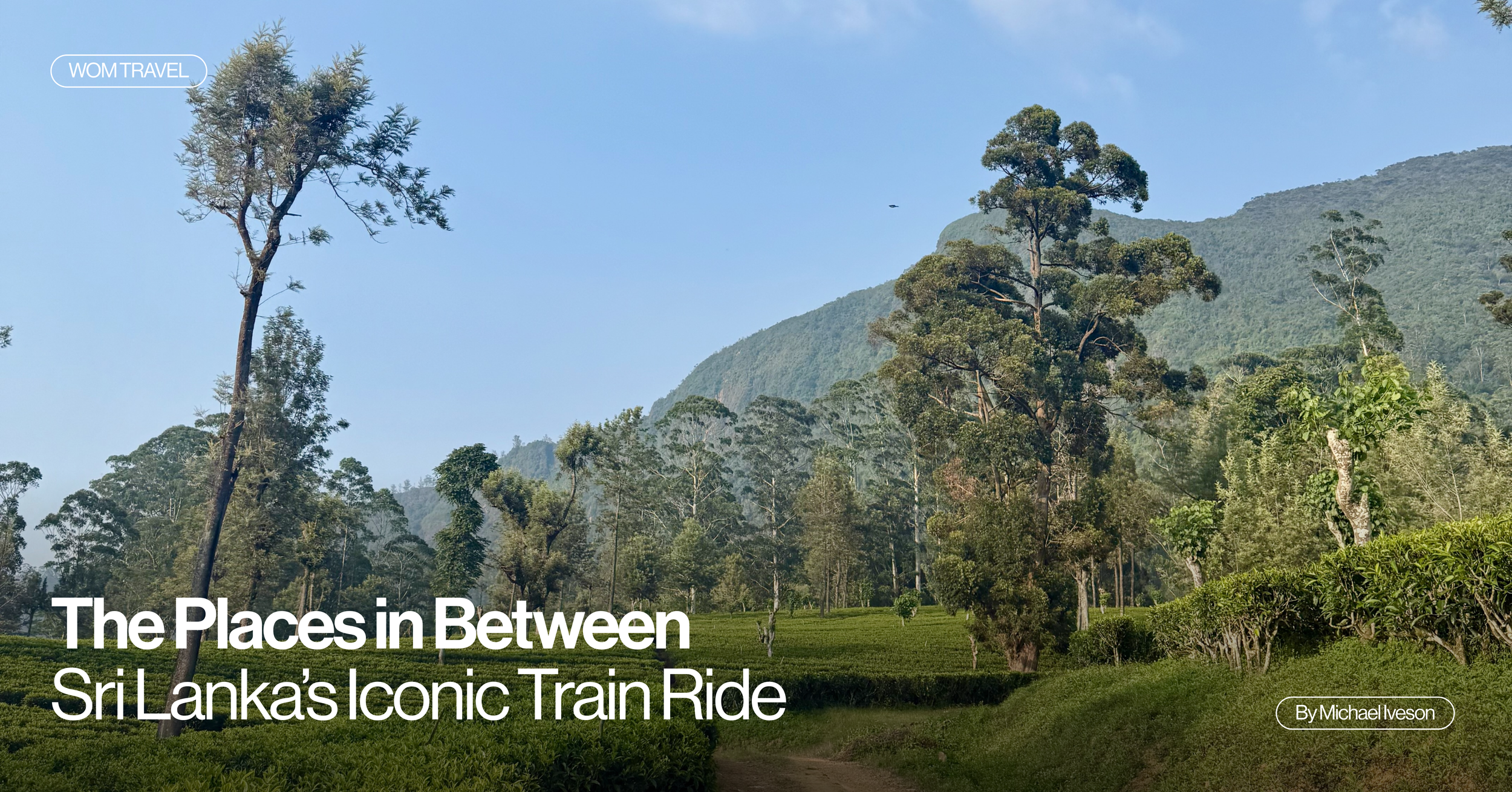
An Alternative to the Iconic Ella Train Ride
LOVE ISN’T BLIND
I first visited Sri Lanka in 2017 - my first time travelling outside of Europe. With nothing more than a curious mind and an overstuffed backpack, I spent three weeks in the Sri Lankan Hill Country working with a local charity that supported schools, monasteries, and health centres. I discovered the programme through my university and saw it as an exciting opportunity to experience a completely new culture and learn more about the world.
I still regularly reflect on this brief trip as one of the most eye-opening experiences of my life, not because I had any kind of profound realisation or watershed moment, but rather because it was the first time I had ever embraced the unfamiliar. Everything about the city of Kandy was completely new to me - and I loved it. So much so that when I was coincidentally offered a job in Sri Lanka five years later, my fond memories and relative familiarity with the place played an important role in my decision to take it.
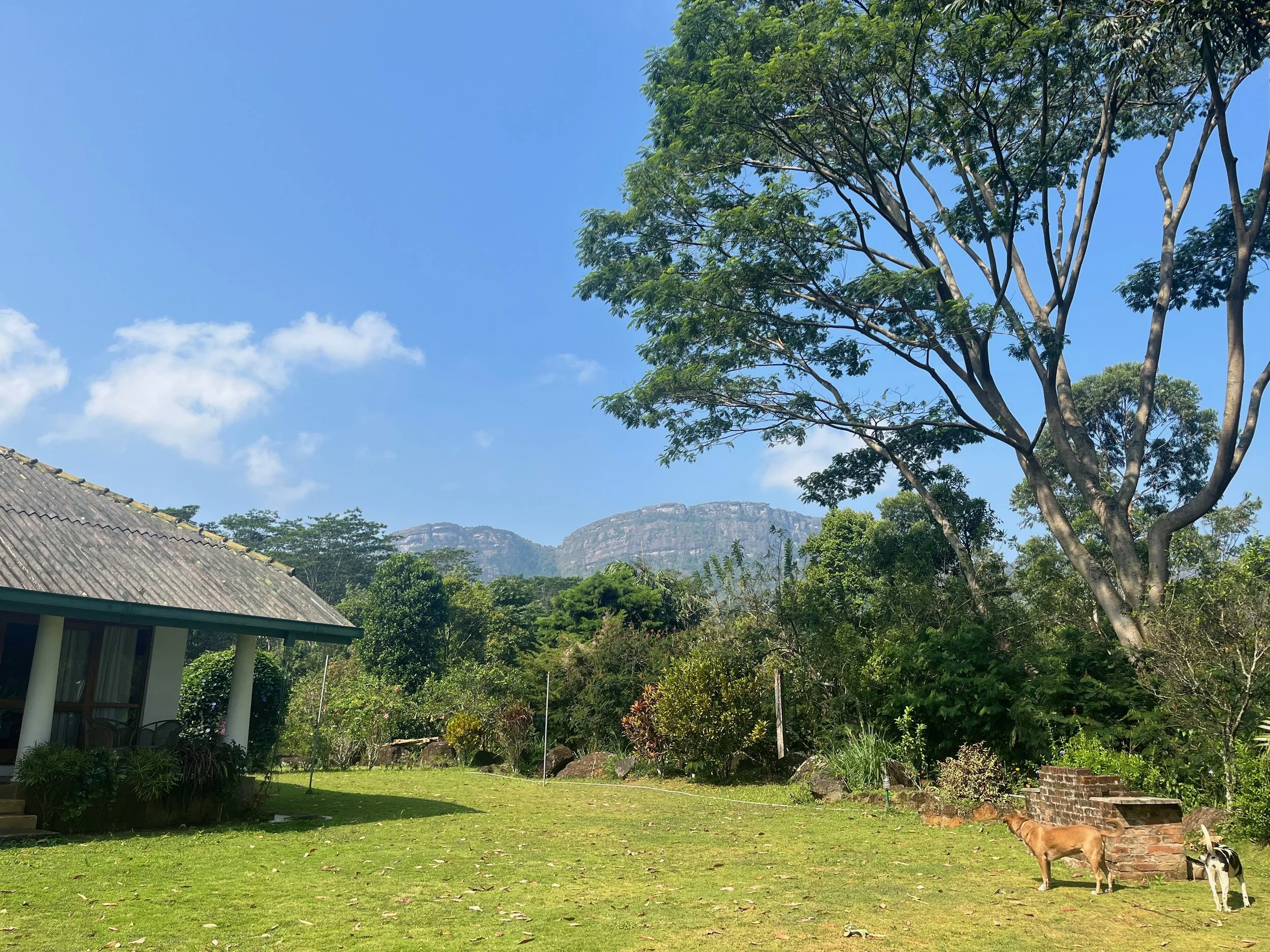
When I eventually returned in February 2023, my first port of call was a trip back to the Hill Country, where it all began. I visited some distant friends of friends in their remote bungalow called Jungle Tide, which sits discretely between jungle and tea fields overlooking the beautiful Hanthana Mountain Range. Jerry and Sally began building Jungle Tide in 2004 before permanently relocating to the Hill Country in 2015, just over forty years after Sally and her family had left what was then Ceylon after four generations of tea planting.
Jerry wrote a fantastic book about his experience building the property and how they overcame the many challenges associated with it, while he watched his wife Sally fall back in love with her childhood home. The brief time I spent there felt like a weekend at my grandparents’ house, filled with exciting stories, dog walks, hearty meals, and evenings by the fire with a beer in hand. I couldn’t recommend it enough for a remote escape just outside one of Sri Lanka’s largest cities.
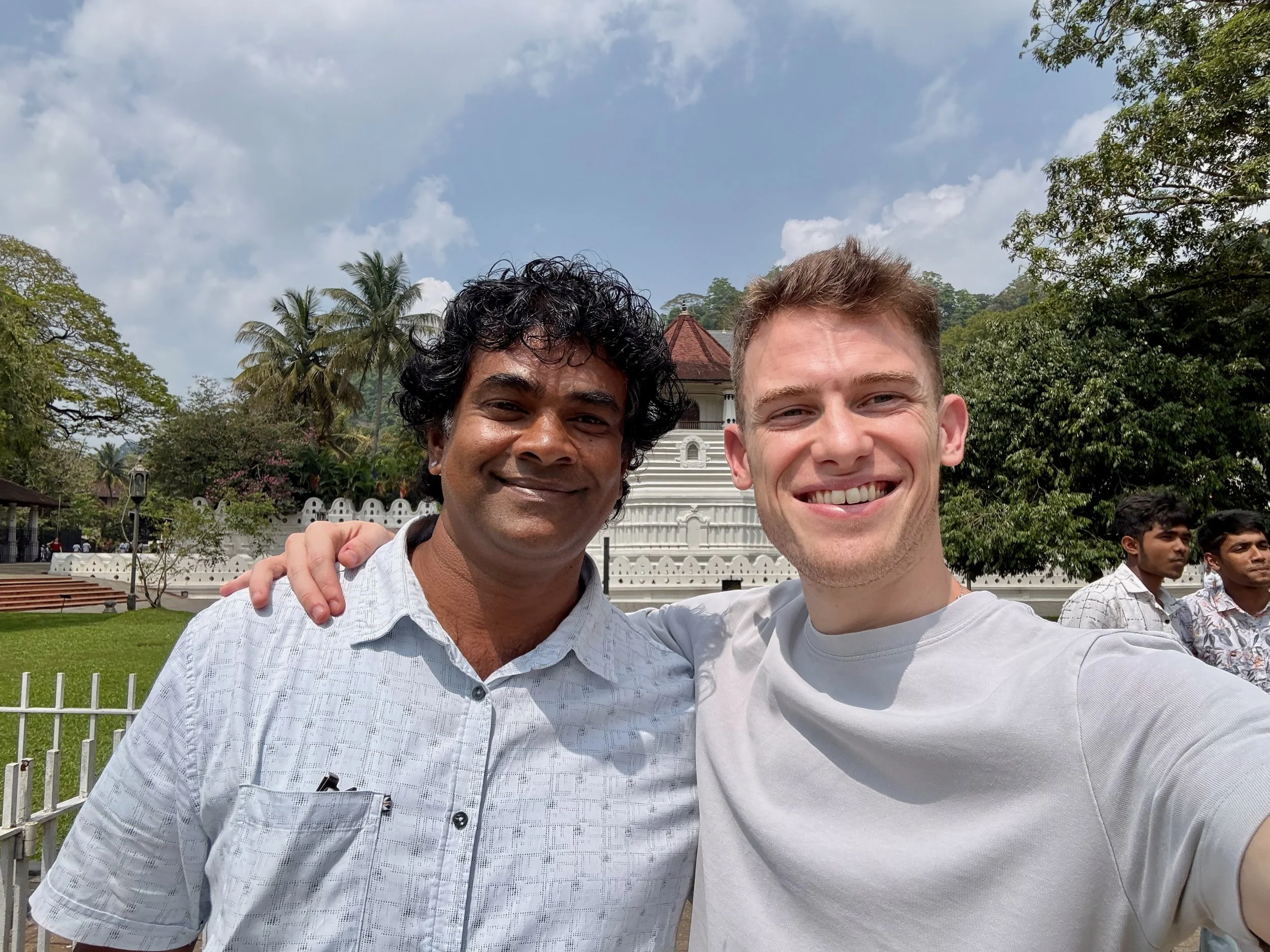
It was on this trip that I met Ram for the first time. With a stud earring that blindingly reflects the intense Sri Lankan sun, and black curly hair inspired by his love for Lionel Richie, Ram hardly blends into the crowded streets of Kandy. A single father of three, Ram works predominantly in tourism and spends a lot of time on the road to earn a living for his family - oh, and their dog Fluffy, who never fails to get a mention when asked about life at home. He took me around Kandy that weekend as I reminisced about the city, pointed out its differences, and told stories about my teenage adventures.
Ram became a trusted driver and friend, and we kept in touch throughout the entire time I lived in Colombo. He even accompanied my parents on a road trip when they visited me a year later, and they regularly speak highly of how he took care of them and showed them some of the most beautiful parts of the island. So, when I returned to Kandy in March 2026, there was only one person I was going to call.
We met up over lunch at Sri Balaji, an iconic dosai restaurant in the heart of the city, and an emotional reunion was accompanied by some incredible food. Lots had happened since I last saw Ram, including his daughter’s marriage, which he promptly revealed beautiful photos of with contagious pride and admiration. But as lunch went on, the conversation slowly shifted to the more complicated parts of what should otherwise have been a perfect day.
Ram is Tamil, the largest of the minority ethnic groups in Sri Lanka, and his daughter married a Sinhalese man, whom he described as caring and very good to her. However, sadness appeared in his eyes as he opened up about the difficult relationship he has with her husband’s parents. He told me how they appear to disapprove of their son marrying a Tamil, yet traditions dictate that she moves to her husband’s town to be closer to his family. Even on the wedding day, Ram said that his family members were reluctant to speak with him, and that he feels excluded from her new life because of her in-laws’ attitude towards him as a Tamil.
Sadly, this is not an unusual tale. The tensions between Tamil and Sinhalese communities run deep, rooted in colonial-era policies that deepened ethnic division, reshaped existing social hierarchies, and helped set the stage for the civil war. Black July, the violent riots of 1983, brought that tension to the surface in the most brutal way, as Sinhalese rioters looted and attacked Tamil-owned businesses and homes across the country, including in Kandy. Ram watched many people in his community lose their homes, businesses, and possessions, and it’s easy to understand how difficult it must be to truly forgive and forget such traumatic events.
So, when Ram’s daughter married into a Sinhalese family that still exhibited many of the indirectly oppressive attitudes towards Tamil people - including towards the father of their son’s new wife - happiness was accompanied by a bitter taste, representative of the underlying tensions that still exist as a legacy of a devastating period in Sri Lankan history.
I said farewell to Ram with a lump in my throat. I don’t know when I’ll see him next, and I don’t know how his family life will evolve. But I do know that his resilience and kindness will continue to improve the lives of those around him, as he did mine.
NO RESERVATIONS
I left Kandy the following day with Ram’s story still lingering in my mind. As I travelled deeper into the Hill Country, the legacy of Sri Lanka’s ethnic divisions began to reveal itself in quieter, more subtle ways.
Navigating through the more remote parts of the region, the gleaming smiles and dramatic waves of tea pickers bring a refreshing enthusiasm that isn’t quite replicated in major towns and cities, accompanying the warmth of the midday sun with a welcome that almost makes me forget the sunburn on the back of my neck.
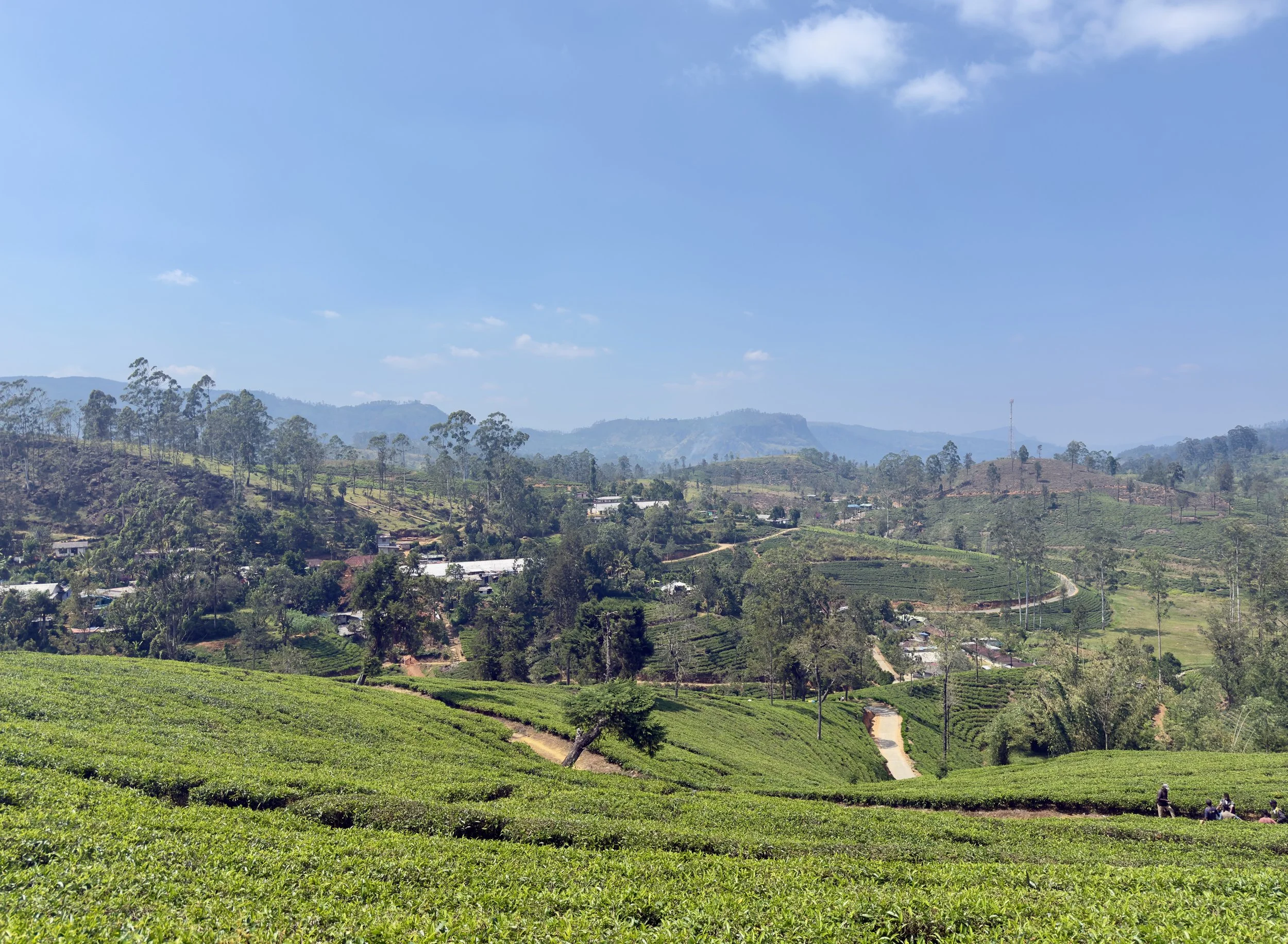
Tea pickers are predominantly Tamil women, who work tirelessly in the midday sun plucking tea leaves by hand, earning very low incomes under poor working conditions. Many of these women are direct descendants of the labourers brought from India during British rule to work on the plantations. Though, even with the expansion and development of the sector, “Hill Country Tamils remain one of the most discriminated-against and economically, socially, and politically marginalised communities in the country”.
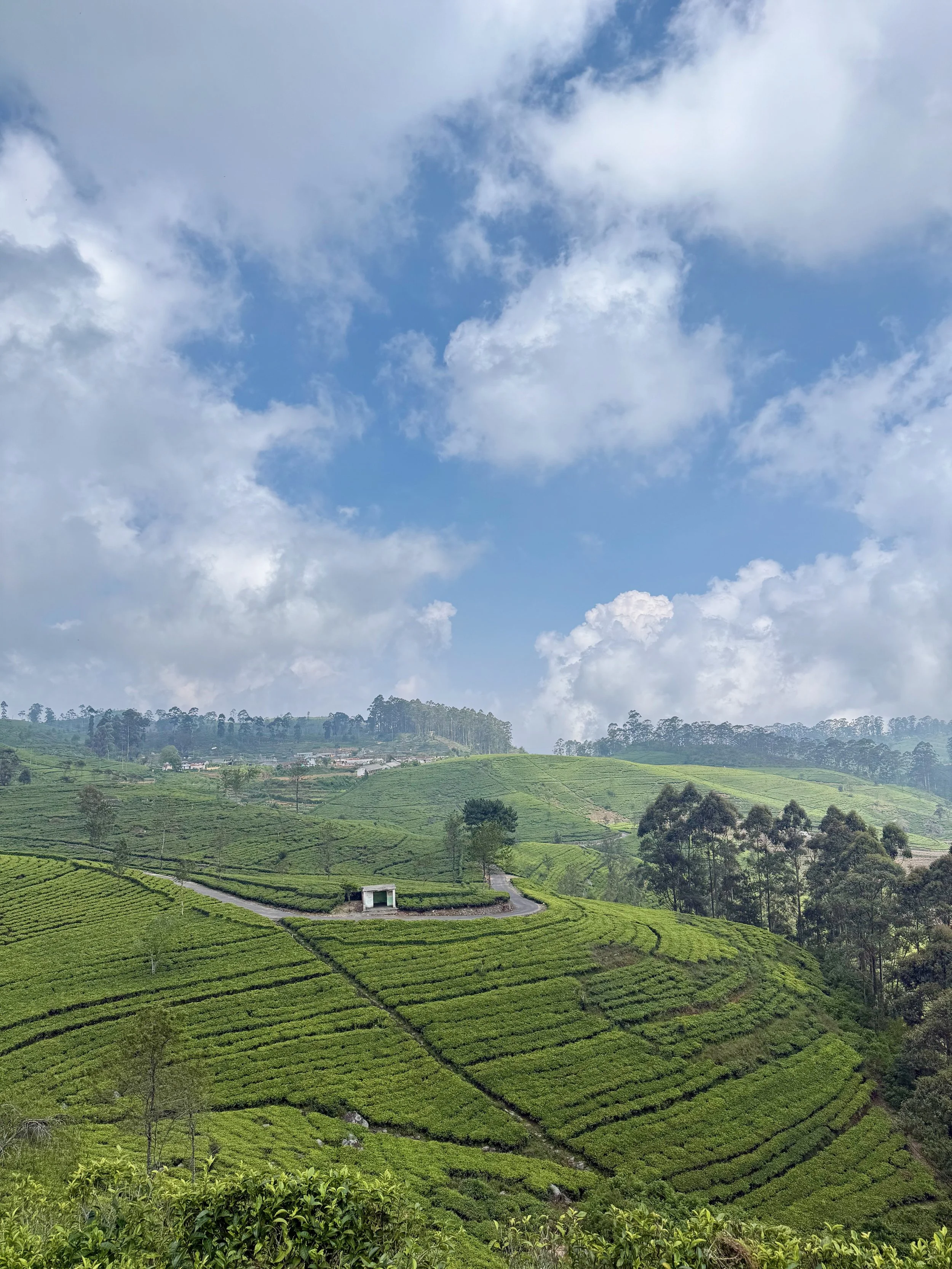
The Hill Country remains reliant on the tea industry as the backbone of its local economy, with much of the land dedicated to cultivating, producing, and distributing tea both locally and internationally. Navigating through the vast estates, the evidence of British colonial presence appears in the form of Holyrood, Somerset, Aberdeen, and various other tea factories and estates that bear familiar British names.
These estates were historically connected by rail to Kandy and Colombo - a railway that still winds through the mountains today. The route was central to the economic and social development of the Central Highlands in the nineteenth and twentieth centuries. The railway winds its way through vast landscapes, clinging to the hillsides as trains shudder over mountain passes and past picturesque villages, at times making passengers feel like they are standing on the edge of the world. Travelling through this historic region gives a brief insight into the local economy, as the sound of horns and shudders disrupt the peace and serenity of the green pastures.
This has naturally attracted a surge of tourists keen to hang out of the train’s doors and windows as part of a viral photoshoot, much to the displeasure of the ticket collectors, who parade the carriages with videos of tourists falling from the train or hitting their heads on lampposts. Quite an effective Early Warning System.
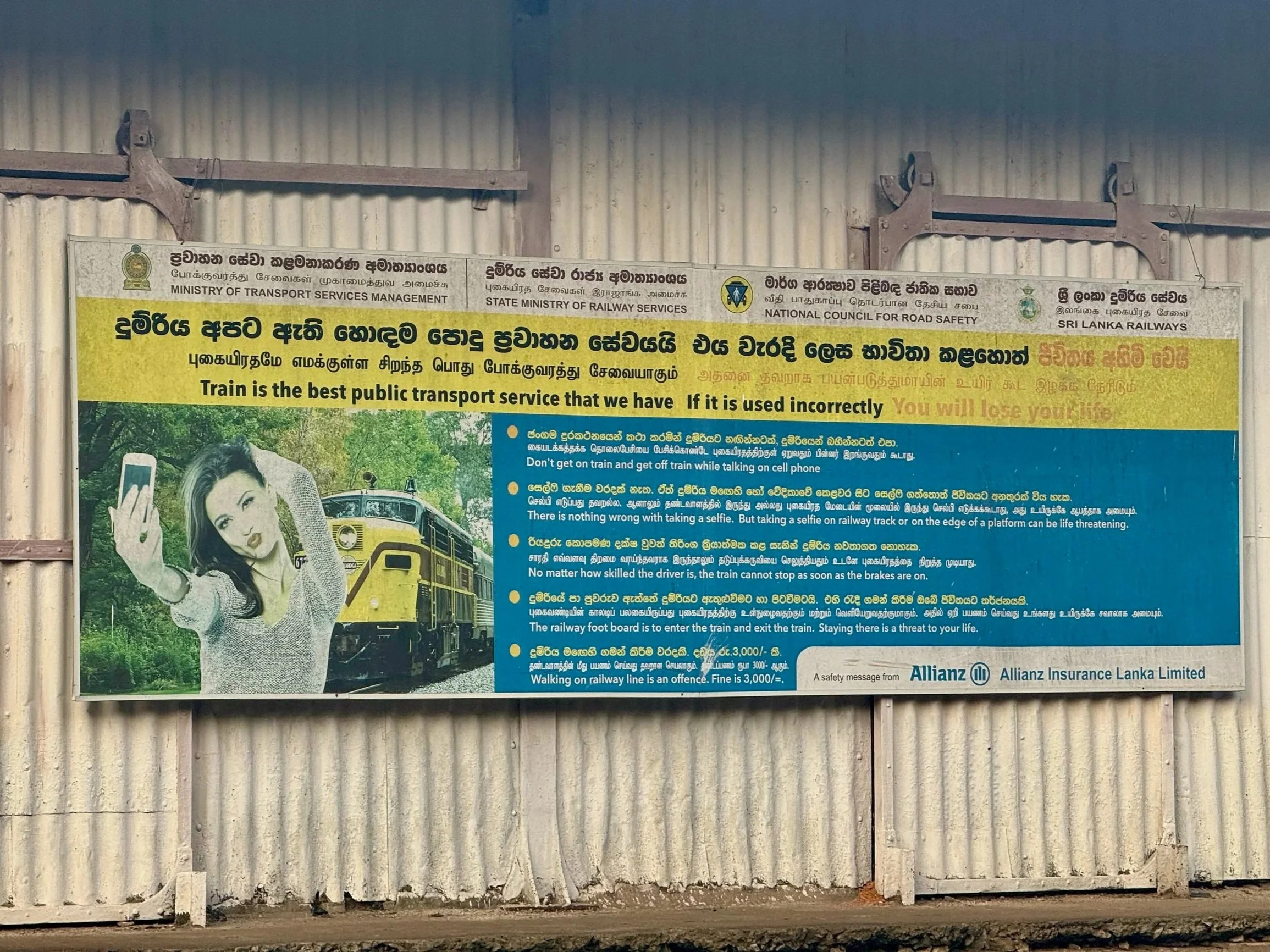
What this means, though, is that purchasing tickets in advance with seat reservations is almost impossible, with touts pre-purchasing reservations that can be sold with a hefty markup, and local commuters slowly being crowded out of domestic train routes by tourists willing to pay Western prices.
The Hill Country is attracting more visitors than ever before, with many travellers desperate to experience what the region has to offer. Yet, journeys remain one-dimensional and prioritise an increasingly oversaturated train route - one of the many flaws that can contribute to tension between locals and tourists.
THE SAME STORY
So why are Ram’s story, the tea fields, and the train routes all telling the same story?
What I learned over the course of a few years in Sri Lanka is that the scenic train ride through the Hill Country isn’t really the best reflection of the region’s beauty. The landscapes are incredible, and I wouldn’t possibly argue with the scenery on display, but the true beauty of the Hill Country comes through the unique discoveries along the way.
The brief interactions with shopkeepers and their kindness as you pass through their village, the gleaming smiles of local schoolchildren who throw a ball in your direction as you pass the cricket fields, the enthusiastic greetings from the resilient women working in the fields - all set against the backdrop of towering mountains, rolling hills, and beautiful tea plantations. Truly exploring the Hill Country means slowing down and embracing the places in between.
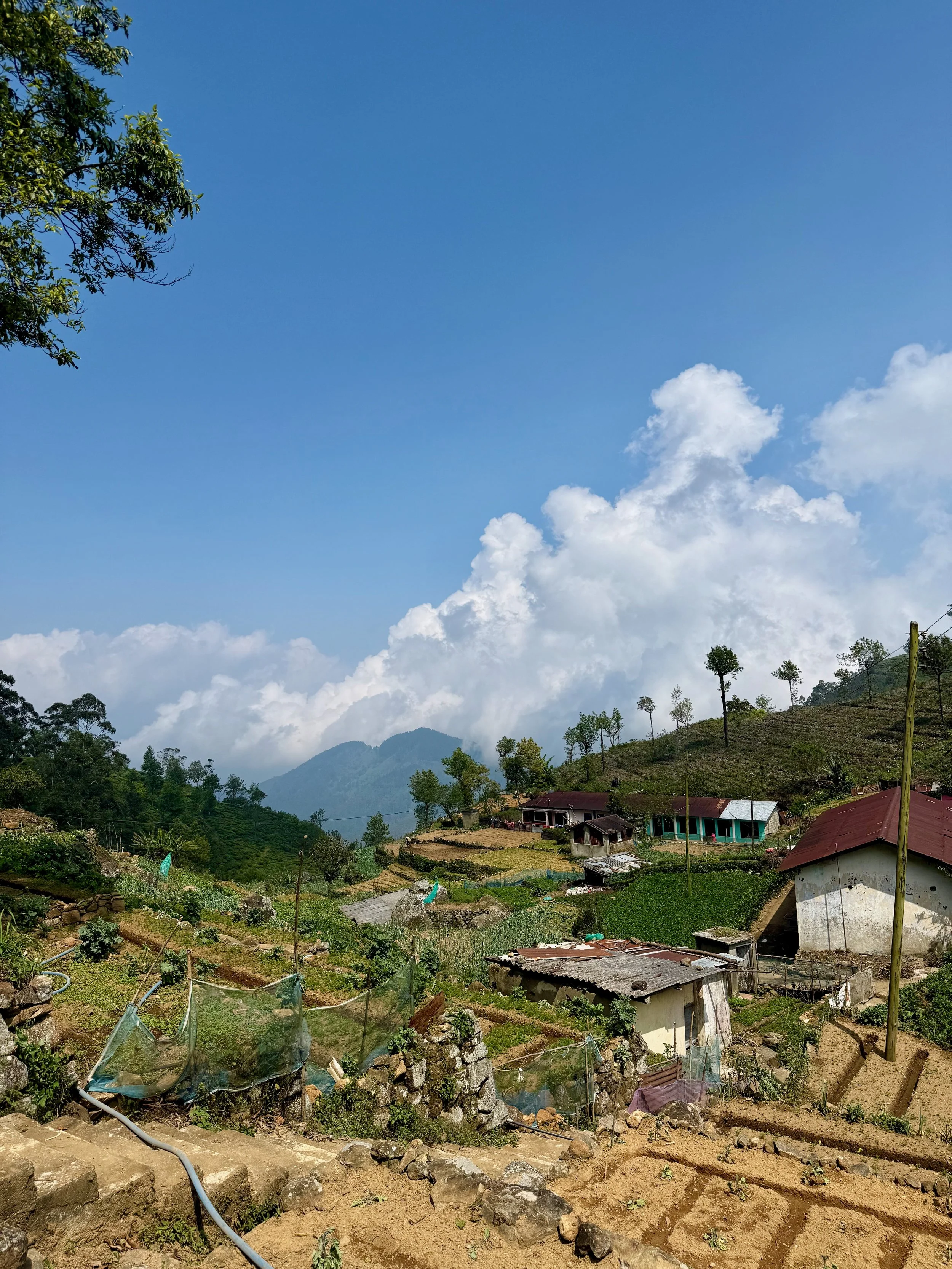
It’s also a far more sustainable form of travel. Rather than adding to an already saturated route, getting off the train and exploring some of the lesser-known areas redistribute tourism revenue to places that stand to benefit even more significantly from new injections of cash. It means supporting local businesses and contributing to remote communities that have historically been economically isolated from the rest of the island due to poor transport links, weak infrastructure, and limited opportunity. It also goes some way in bridging the gap between marginalised communities and the rest of the economy, the divide of which often falls along ethnic lines.
With this in mind, I ended my return to the Hill Country at AMBA Estate, an organic farmstay and social enterprise in Ambadandegama that captures tourism revenue and spends locally to develop some of the poorest areas of the Uva Province. When I spoke with the owner, Simon, who also has a background in economics and a longing for work with tangible, direct development impact, he described the business as the most effective development project he had ever worked on.
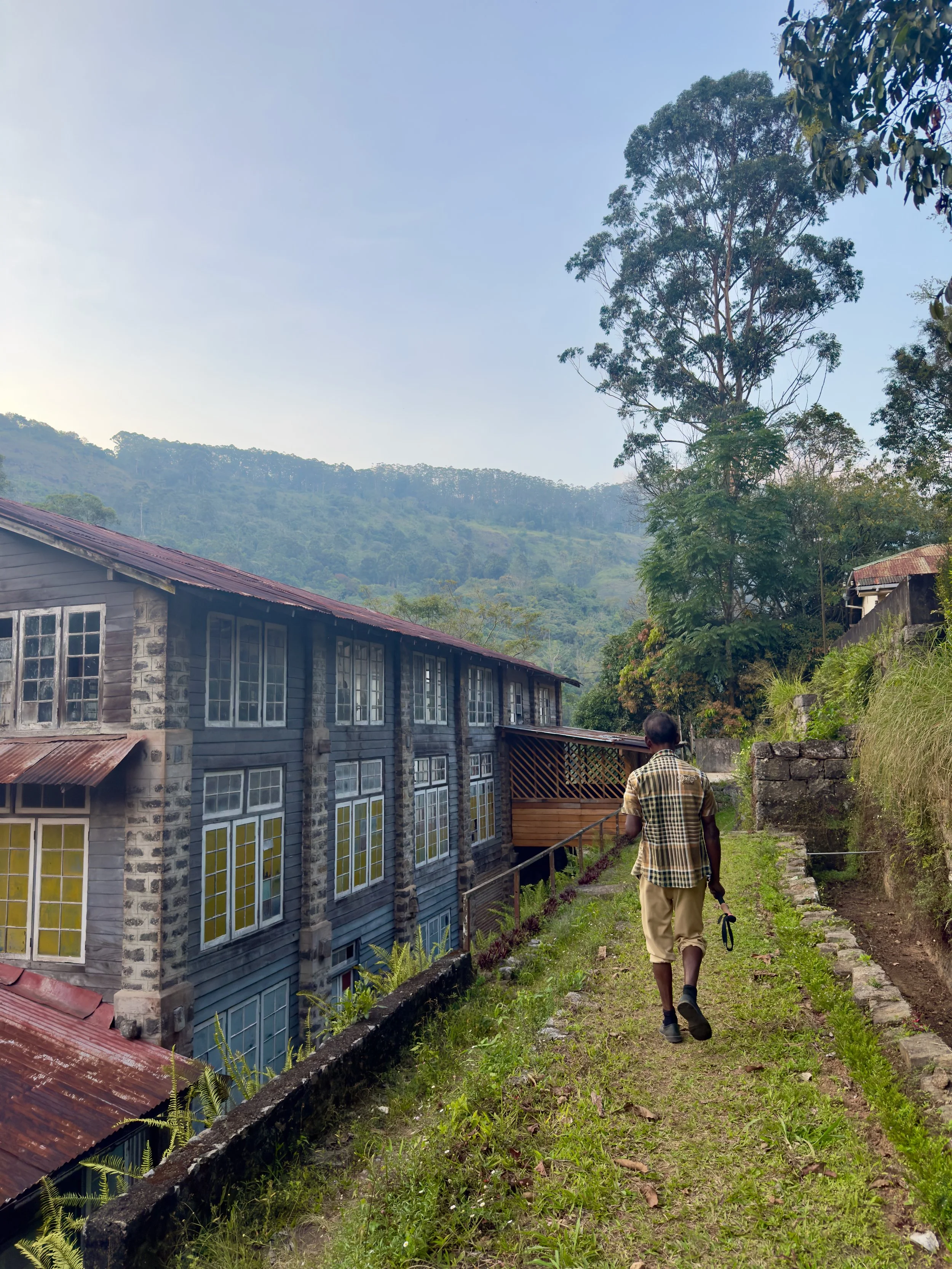
The idea behind it is surprisingly simple: keep tourism money in the local community. Rather than waiting for the economics to trickle down, direct action has an immediate economic and social impact that continues to grow over time. Sustainable tourism, hidden gems, authenticity, community empowerment, economic development, these all intersect at the same point: spending locally - and recent events have made the need for this approach even more pressing than before.
AFTER THE STORM
Late last year, Sri Lanka experienced its worst natural disaster since the Boxing Day Tsunami of 2004 - Cyclone Ditwah. The cyclone disproportionately affected rural communities, particularly those in the Hill Country, and when I returned in March, the devastating impact of the disaster was clear.
The picturesque green mountains were scattered with vivid orange patches - harrowing scars of the landslides that destroyed homes and isolated communities across the region, as well as rubble and debris scattered throughout the region’s winding roads. Chamil, a local driver, told of how many of his friends had even travelled from different parts of the island to support the reconstruction and clearance in the Hill Country - a glimmer of hope through togetherness and unity.
One of the major disruptions in the Hill Country has been the closure of the Kandy to Badulla railway line, which has naturally led to disruptions in travel for both locals and visitors alike. Given the overreliance on this train journey for many visitors exploring the Hill Country, travellers now continue to bypass some of the region’s most incredible hidden gems by road rather than rail.
But this disruption presents an opportunity. Rather than traversing the same route and concentrating in congested major towns, this is the chance to explore the beauty and hospitality of the places in between.
BEYOND THE TRACKS
Tea trails have been at the heart of Hill Country access for centuries, connecting plantations and villages as hard-working tea pickers, factory workers and landowners cultivated the fields and gave birth to world famous Ceylon Tea. The hidden trails that have linked these estates for centuries are the arteries of the region, unlocking trade and forming communities at every turn in the road.
These trails have been carefully restored and waymarked in recent years, bringing to life the Pekoe Trail, a 300km long-distance walking route through Sri Lanka’s hill country, stretching from Kandy to Nuwara Eliya. It weaves through communities rich in history and heritage, often running alongside the old railway before branching off into ever-changing landscapes. Within just a few kilometres, hikers can move from lush tea plantations to rugged mountain terrain, taking in sweeping views that reach as far as the Indian Ocean, and passing through colourful villages where striking Hindu kovils or Buddhist stupas rise above the valleys below.
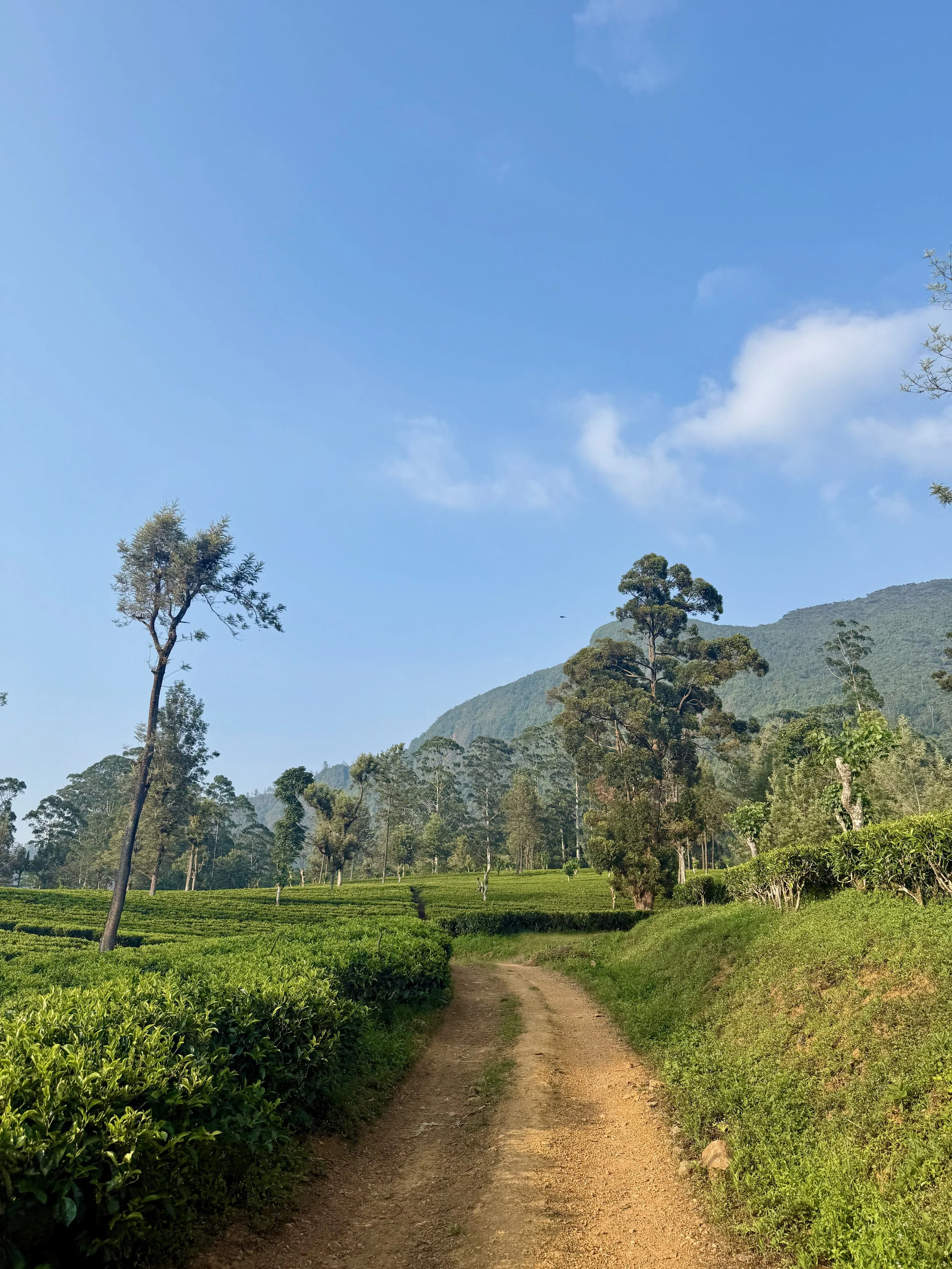
The route unlocks a meaningful and adventurous way to explore Sri Lanka’s Hill Country and gives a more authentic insight into the communities that have been at the backbone of local life for centuries. It’s possible to join and leave the trail at various points throughout the Hill Country, with small towns acting as trail heads for access to public transport and main roads, and it’s straightforward to organise bag transport from hotels as part of a point-to-point route.
For travellers, runners, hikers and explorers who want to experience the authenticity and hospitality of the Hill Country and support some of the most isolated and marginalised communities in the region, the Pekoe Trail is an exciting alternative to Sri Lanka’s increasingly beaten path.
ABOVE IT ALL
Towering over the plantations and many of the newly connected trails is Sri Pada (Adam’s Peak), a sacred mountain that has religious and cultural significance for the diverse communities of the Hill Country. Translated from Sinhala, Sri Pada literally means “sacred footprint”, owing to the rock formation that resembles a footprint at the summit.
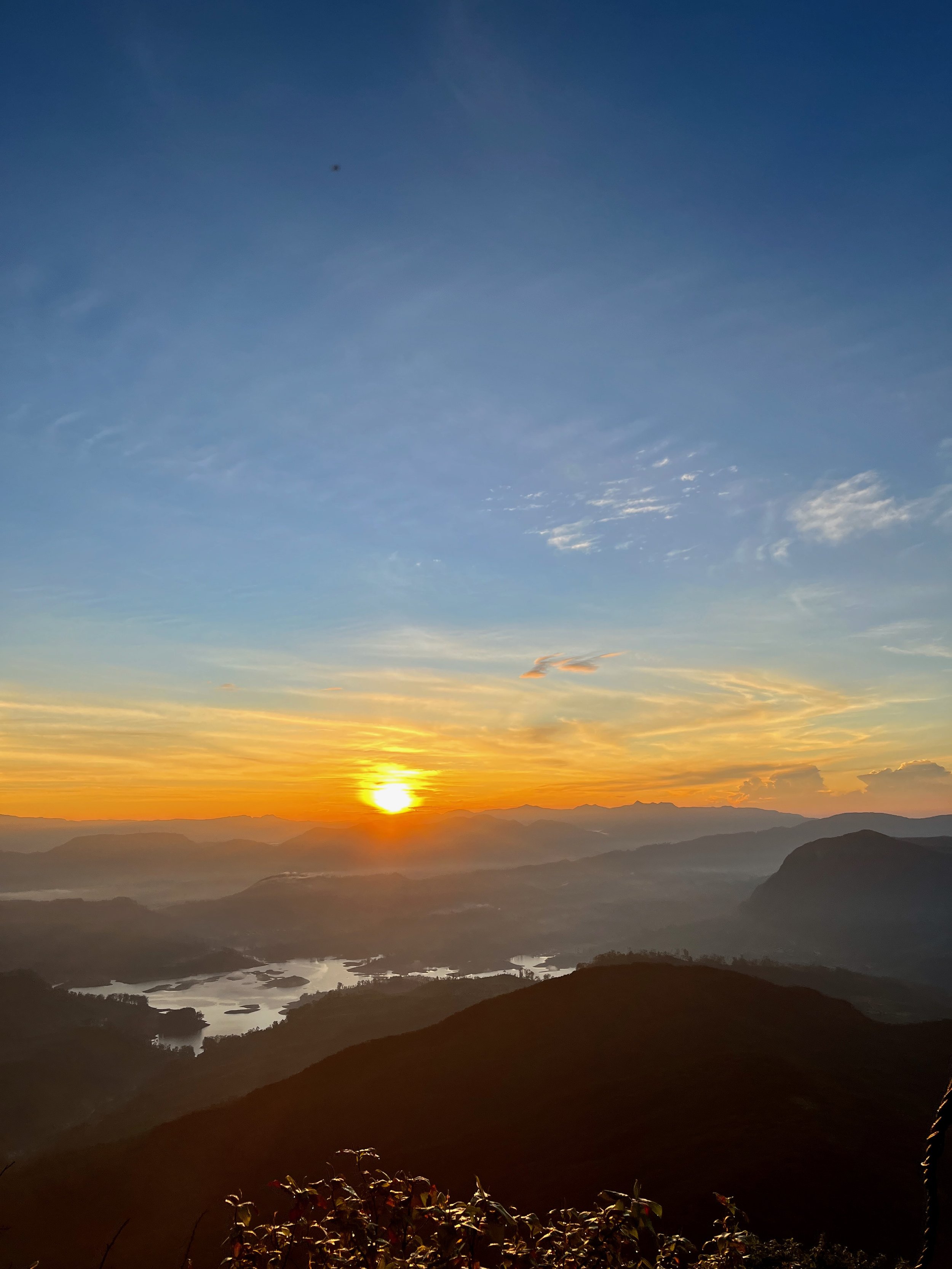
The mountain is a pilgrimage for Sri Lankans, with men and women of all ages taking on its nearly 6,000 steps as a demonstration of their commitment and faith. Many pilgrims even take on an overnight hike, beginning in the early hours of the mountain, to partake in a traditional sunrise ceremony overlooking the vast mountains of the Central Province.
At the peak, the constant sound of the bell dissipates into thin air, with each ring symbolising completion. On my own visit to Sri Pada in 2023, one man rang the bell 24 times, owing to his annual pilgrimage upon losing his mother that many years earlier. The summit is a place of peace and serenity, the true embodiment of the island’s shared spirituality.
Looking out from the peak, the landscape offers a tiny insight into the composition of the Hill Country, but only once you venture deep into its shadows do the intricacies of the region begin to reveal themselves. The richest experiences exist beyond the main trails, whether it’s Maskeliya directly below, perched on the banks of the impressive Maussakelle reservoir, or the distant mountains that surround the historic town of Haputale.
Sri Pada embodies everything about the Hill Country, a cultural, historical and religious centre around which the local economy has developed, but also a clear demonstration of the vastness of the region and the diversity of its landscapes, villages and communities.
If you’re seeking an undiscovered route through the Hill Country to explore some of Sri Lanka’s most historic and culturally rich areas, there are so many ways to do it. Join and leave the trail at various points, spend an extra night in the homestay that cooks incredible food, miss the next bus to spend more time traversing the local trails, stop for tea at a local kade.
The point is: if you allow some flexibility within your travel window, special moments will arise that you won’t want to rush. If you’re bound by a tight schedule that prioritises the main route as a means of ‘ticking the box’ for the Hill Country, you stand to miss everything that it has to offer.
It’s impossible to explore the entire region - even if you navigate the entirety of a 300km trail - but that’s the beauty of it. Every single experience is different, every window into local life offers a completely unique perspective, even just a few kilometres down the road, and every day is yours. You’ll leave fulfilled, despite only scratching the surface.
Skip the train, slow down, and embrace the places in between.
If you’re interested in reading more of Michaels work, checkout his Substack here: Adventurous on Paper
If you’re looking to collaborate or feature your work, you can apply to join our Creative Community here.